
Ground That Becomes Usable Again
Stump Grinding in Twin Valley for lots where the remaining stump blocks building, planting, or grading
After a removal on a small lot or a new building site, the stump is often what stops the ground being usable, so grinding is usually booked alongside the removal across Twin Valley and the surrounding area. Burleys Tree Service grinds stumps in Twin Valley, with the owner and his father doing the grinding themselves. You receive a free estimate on every job that states exactly what the work includes.
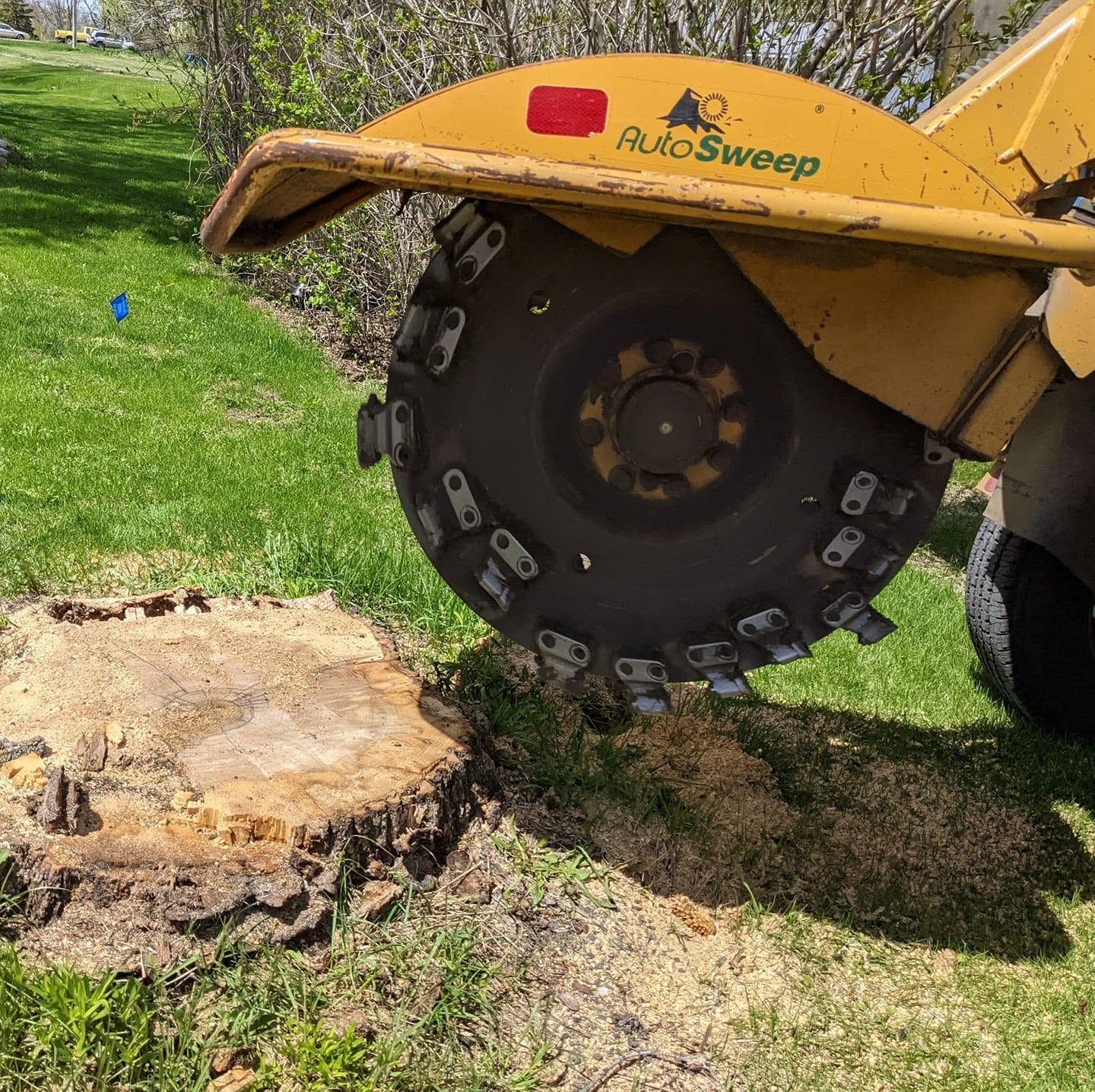
The stump is ground below the surface with the grinder working across it in passes, leaving chips that can be left in place as mulch or hauled away. The estimate states whether the chips are removed and how far below grade the stump is taken, which affects how soon the ground can be seeded or built on. That depth matters if you are preparing the site for a structure, a driveway, or new plantings that need settled soil.
Schedule a property evaluation to identify depth requirements and chip disposal options for your site.
What the Grinding Process Removes
Grinding removes the visible stump and the root crown below it, reducing the wood to chips small enough to decompose or be worked into the soil. The grinder cuts in horizontal passes, lowering the stump incrementally until it is taken below the surface to the agreed depth, typically several inches beneath finished grade.
Once the stump is ground, the site becomes level with the surrounding ground and the chips fill the void left by the removed wood. You will no longer see the raised stump or deal with its interference when mowing, grading, or building, and the ground can be prepared for whatever use you have planned. The chips settle over time as they break down, so topping off with soil may be needed before final seeding or construction.
Grinding does not remove all lateral roots that extend beyond the stump perimeter, but it clears the central mass that prevents access and use. For sites in Ada and Audubon where lot size is limited, removing the stump restores usable yard space and eliminates the tripping hazard and maintenance obstacle the stump presented.
Answers About How the Work Is Done
Property owners preparing ground for building, landscaping, or field use often ask how grinding affects the timeline and what happens to the material left behind.
What depth is the stump ground to?
The stump is ground several inches below the finished grade, with the exact depth confirmed in the written estimate based on whether you plan to seed, pave, or build over the area.
How are the wood chips handled after grinding?
The chips can be left on site as mulch or hauled away, and the estimate specifies which option is included so there is no confusion about cleanup responsibility.
How soon after grinding can the site be used?
The ground can be worked immediately once the stump is removed, but settling occurs as the chips decompose, so adding topsoil and waiting a short period improves the base for construction or planting.
What happens to roots that extend beyond the stump?
Lateral roots are left in place and decompose over time, but grinding removes the central root mass and crown that interfere with grading, digging, and site preparation.
Why does the estimate specify depth and chip removal separately?
Depth affects equipment time and how much material is created, and chip removal adds hauling and disposal work, so stating both in writing ensures the quote reflects the actual scope and prevents surprises at completion.
Burleys Tree Service also grinds stumps in Ada, Felton, Hendrum, Hitterdal and Detroit Lakes. Burleys Tree Service is fully licensed and fully insured, and the crew provides a free estimate on every stump grinding job to confirm depth, chip handling, and site preparation requirements before work begins.