
Keeping Trees Clear of Structures and Power Lines
Tree trimming in Twin Valley for overgrown shelterbelts and farmstead trees touching buildings and utility lines
Rural properties across Twin Valley and Felton carry old shelterbelts and tree lines planted decades ago, often before modern utility layouts were finalized or outbuildings were repositioned. Burleys Tree Service handles tree trimming for homeowners and acreage owners who need limbs pulled back from power lines, roofs, and farm structures. The owner and his father do the cutting themselves, walking each property before writing a free estimate and working through the canopy in a deliberate order that keeps the tree sound while removing what threatens buildings or wires.
Trimming starts at the top of the canopy and works downward, removing dead limbs first, then any branches that cross or rub against each other, and finally growth that extends toward structures or lines. The goal is clearance and structural soundness rather than decorative shaping, since most of these trees serve as windbreaks or shade rather than ornamental plantings. Debris is either hauled off the property or chipped on site, depending on what was agreed during the estimate.
Schedule a property walkthrough to identify which limbs need removal and how close current growth sits to your buildings.
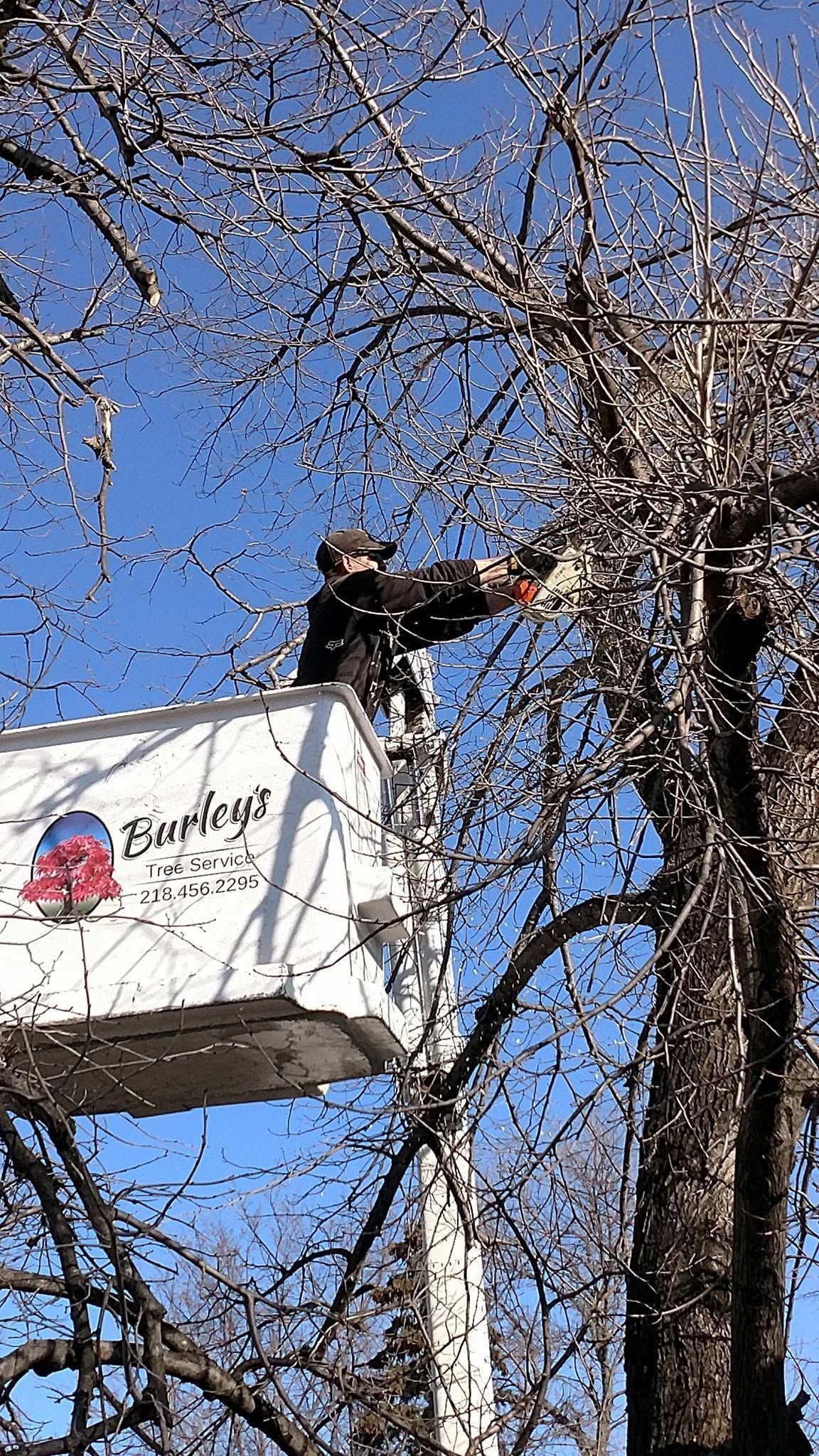
What Proper Trimming Requires
Each tree is assessed for lean, branch weight distribution, and proximity to structures before any cuts are made. Dead limbs are identified by bark condition and branch flexibility, crossing limbs are marked where bark has worn through from friction, and clearance distances are measured from roof edges and wire spans. Cuts are made just outside the branch collar to allow the tree to seal the wound naturally without leaving stubs that invite rot.
After trimming is finished, you will notice clear space between the canopy and any structures, no limbs hanging over rooflines or reaching toward power lines, and a more open canopy that allows light and air to move through without the dense tangle that built up over years of unchecked growth. The tree retains its windbreak function and its shape, but the risk of branch failure onto buildings or into wires is removed.
Burleys Tree Service is fully licensed and fully insured, with three years in tree work and substantial hands-on land clearing experience that informs how each cut affects the tree's balance and structure. The crew does not top trees or strip canopies; trimming is selective and leaves the tree capable of continued growth.
What Property Owners Ask About the Work
Trimming questions often focus on how the work is sequenced, what gets removed, and what changes after the crew finishes.
What happens during the property walkthrough before trimming begins?
The crew walks the tree line or yard with you, identifies limbs that are dead or too close to structures, measures clearance from power lines and rooflines, and writes a free estimate that specifies what will be cut and how debris will be handled.
How do you decide which limbs to remove and which to leave?
Dead limbs are removed first based on bark condition and lack of flexibility, then crossing or rubbing branches where bark has worn through, and finally any growth within clearance distance of buildings, wires, or driveways.
What is the difference between trimming and topping a tree?
Trimming removes specific limbs to improve structure and clearance while leaving the canopy intact; topping cuts the entire crown back to stubs, which weakens the tree and causes fast regrowth of poorly attached shoots.
What should you do with the wood after trimming?
Debris can be hauled off the property entirely, chipped and spread as mulch, or cut into firewood-length rounds and stacked on site, depending on what you specify during the estimate.
How much clearance should be maintained between tree limbs and a house or garage in Twin Valley?
Most trimming jobs in this area target at least three to five feet of clearance from roof edges and siding to prevent branches from scraping during wind and to reduce the chance of limbs breaking onto structures during storms.
Burleys Tree Service also performs tree trimming in Ada, Felton, Hendrum, Hitterdal, and Detroit Lakes. Call (218) 584-8733 to arrange an estimate based on the size and location of the trees you need trimmed.