
New Trees for Open Land and Building Sites
Tree planting in Twin Valley for windbreaks, yard trees, and replanted acreage after clearing
New building sites and acreage properties around Hendrum and Ada often lack mature vegetation after clearing, leaving open land exposed to wind and lacking the shade or privacy that established lots take for granted. Burleys Tree Service plants trees for homeowners and farmstead owners who need windbreak rows, yard shade trees, or screens to define property edges. The owner and his father handle the planting themselves after a site visit to select species and spacing suited to the exposure and the purpose.
Planting begins with a consultation to determine whether you need a shelterbelt row, a single specimen tree, or a screen planting, and what species will survive the soil and sun conditions at that location. Trees are set at the same depth they grew in the nursery, with the root flare visible at ground level, and mulched to retain moisture and suppress competing grass. Stakes are placed where needed to hold the tree upright through the first season, and aftercare instructions are given at handover so you know how often to water and when to remove the stakes.
Request a site visit to review your property layout and identify the best locations and species for planting.
Why Species Selection Affects Long-Term Results
The species chosen for planting determines how the tree will perform over decades, including how fast it grows, how tall and wide it will reach, whether it tolerates drought or wet soil, and whether it survives sustained wind exposure. A windbreak row typically uses dense, fast-growing conifers planted in staggered lines, while a yard tree is often a spreading hardwood that provides shade without dropping excessive debris or lifting sidewalks with surface roots.
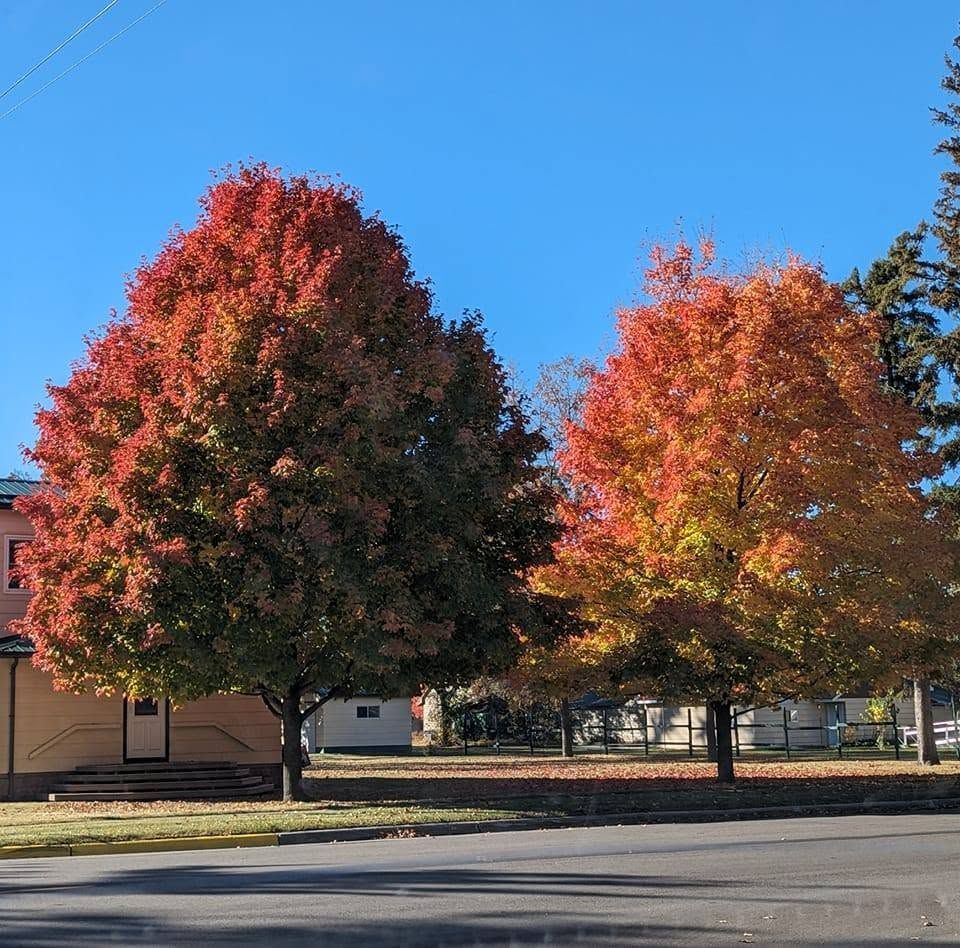
After planting, you will see mulch rings around each tree, stakes angled into the prevailing wind direction if support was needed, and clear spacing between plantings that allows each tree to develop a full canopy without crowding. The trees will be upright, the soil settled and watered in, and any protective wrapping or burlap removed from the root ball.
Spacing decisions are made based on mature canopy width, so young plantings may look far apart initially but will fill in as they grow. Burleys Tree Service provides free estimates on every planting job and is fully licensed and fully insured.
Answers About How the Work Is Done
Planting questions often center on species choice, site preparation, and what happens after the trees are in the ground.
What happens during the site visit before planting?
The crew walks the property with you to assess sun exposure, soil drainage, and proximity to buildings or utility lines, then recommends species and spacing based on whether you need a windbreak, shade, or a visual screen.
How deep should a tree be planted?
Trees are set at the same depth they grew in the nursery, with the root flare visible at ground level; planting too deep suffocates roots and causes the trunk to rot where it meets the soil.
What kind of trees work best for windbreaks on acreage in Twin Valley?
Windbreak rows typically use conifers such as spruce or pine, planted in multiple staggered rows to create a dense barrier that slows wind without creating turbulence on the downwind side.
How long does it take for a newly planted tree to establish?
Most trees require one to two years of regular watering to develop a root system strong enough to survive drought, after which they grow more rapidly and require less intervention.
What should you do to care for a newly planted tree during the first season?
Water deeply once or twice per week during dry periods, maintain a mulch ring to suppress grass competition, and remove stakes after one growing season to allow the trunk to strengthen naturally.
Burleys Tree Service also plants trees in Ada, Felton, Hendrum, Hitterdal, and Detroit Lakes. Call (218) 584-8733 to arrange a consultation and free estimate for your planting project.